
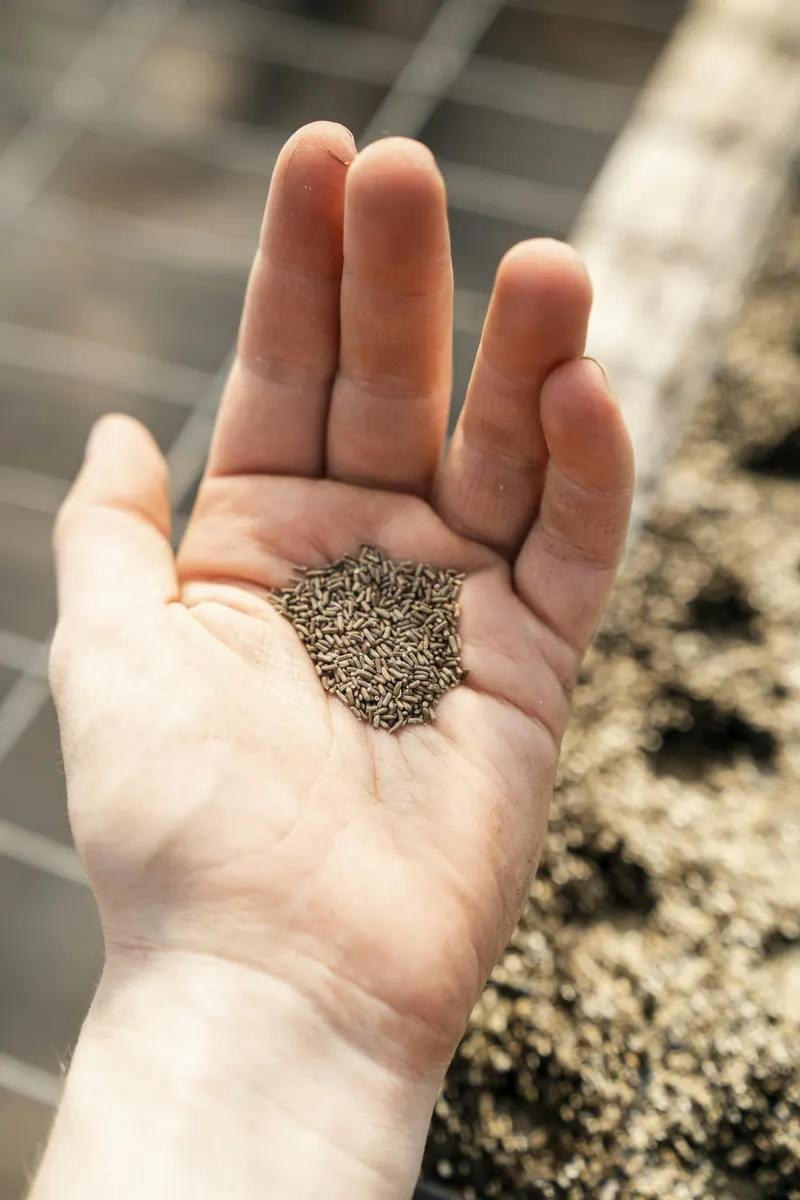
In 2011 the town of Seferihisar, on the Aegean coast near İzmir, held a seed-swap festival. Two years earlier Seferihisar had become Türkiye's first Cittaslow, or "slow city", and it was one of the first places in the country to work on protecting local seeds.
Years in a chest
An elderly farmer from the village of Gödence came to the festival with a handful of seeds. He had kept them for years in an old chest at home. They were topan karakılçık, a local wheat that is grown in very few places today and had almost been forgotten. He gave the seeds to the municipality.
At the time the municipality was running a project called "Another Agriculture Is Possible". It had four steps: opening producers' markets, setting up producer unions and cooperatives, processing products to add value, and protecting local seeds. Karakılçık became the best-known example of that last step.
From one square metre to whole fields
A handful of seeds does not make a field. So they were first sown on about one square metre. The ears of wheat that grew were neither eaten nor sold; the next year they went back into the soil. This was repeated every year, a patient job that took several years. As the seed multiplied, the sown area grew.
Turning point
The first harvest came at the end of July 2016: about one tonne of wheat. It was ground into flour the old way at a village mill. In the villages of Turgut and Ulamış, women kneaded sourdough bread from that flour. The loaves were baked in a stone oven in the village of Beyler and sold in the municipality's shops in central Seferihisar and in Sığacık.
Where are the seeds kept?
After the seed-swap festivals, the Can Yücel Seed Centre was set up, named after the poet Can Yücel. The centre stores hundreds of local seeds, multiplies them and passes them on to growers. According to a 2016 report, local seeds were being sent free of charge anywhere in Türkiye. Seed swaps still take place in the district's villages, and its festivals include the Ata Ekmeği (ancestral bread) and Armola Festival.
Today
Karakılçık is now grown on hundreds of decares in Seferihisar. A decare (dönüm) is 1,000 square metres, the usual unit for farmland in Türkiye. According to the municipality, the wheat is also protected by a geographical indication. A piece published in June 2026 says it is sprouting again in Gödence.
The link to trust
Without someone to keep them, those seeds would have been lost. Keeping is work too.
What do you think?
Is there something in your home that has been kept for years? Why is it kept?
Sources
Go to source · Accessed 22 November 2026
"Sandıktan Sofraya" (news agency report, in Turkish), Son Dakika
Go to source · Accessed 22 November 2026
Related to this story
Do you have a story?
Tell your story →