
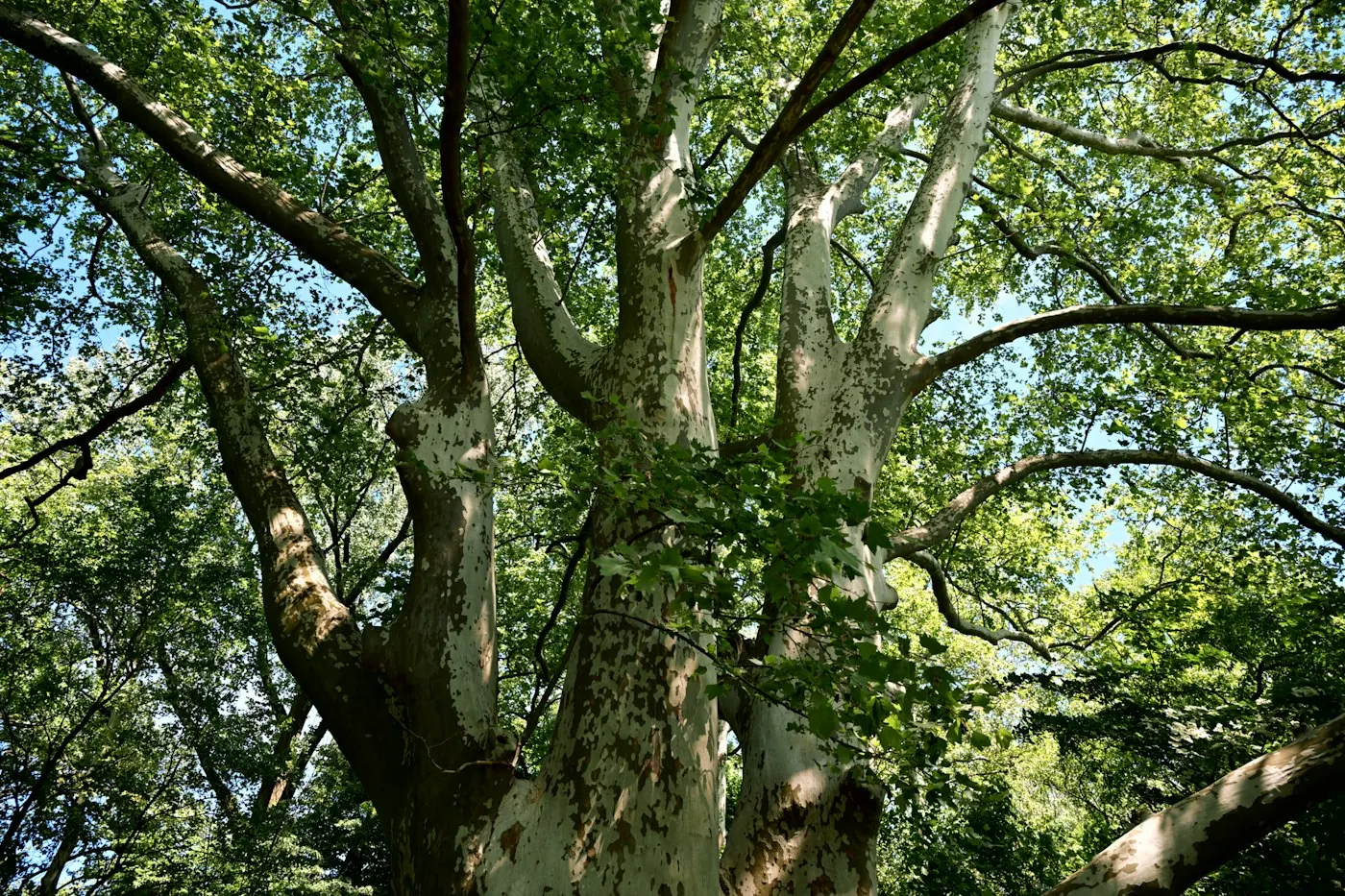
The branch was spared; the mansion walked
How was it back then? The branches of the great plane tree beside the mansion touched the building. Instead of cutting the branch, the mansion was moved 4.8 metres on rails. That tree is still alive today; its age is reported as about 400 years.
What does it tell us today? Cutting, demolishing or throwing away may not be the only way to solve a problem. A little time, effort and creativity can protect something living. Today, when we meet a tree or an old building, we can ask: “is there a way to solve this by keeping it?”
The sustainability link: Looking for a solution without cutting a living tree is a direct example of protecting biodiversity and green space.
Try it: Children: pick a tree near home and ask an elder how old it is. Families: before breaking something, think once together whether it can be solved without breaking it.
Source
Land nobody wanted
How was it back then? Experts had found the land swampy and barren. Today it is a green farm; it was donated to the nation in 1937.
What does it tell us today? A place that looks neglected or unproductive can change with effort. A building garden, a school front or an empty corner can turn green with the care of a few people.
The sustainability link: Winning back seemingly unproductive land with effort is an example of sustainability in terms of soil protection and ecosystem repair.
Try it: Young people: try greening a neglected corner (a building garden, a school front) with a few friends. Children: grow a flower on the balcony.
Source
Little homes were built for birds
How was it back then? In the Ottoman period, small nests for birds were built into the façades of mosques, madrasas, caravanserais and houses. Some buildings also had bowls where birds could drink.
What does it tell us today? A small water bowl or a simple nest box is still the simplest care we can show birds. For a child in the city it is also an easy way to meet nature.
The sustainability link: Providing water and shelter for birds is a small contribution to urban biodiversity; a sustainable city is one that makes room for other living things alongside people.
Try it: Children and families: put a small water bowl on the balcony or in the garden. Schools: give pupils the job of filling it.
Source
The way of living with a tree
How was it back then? Traditional knowledge, methods and practices of olive cultivation were inscribed in 2023 on the UNESCO List of Intangible Cultural Heritage in Need of Urgent Safeguarding. In other words, this knowledge may be lost if it is not kept alive.
What does it tell us today? Knowledge lasts as long as it is kept alive. Writing down what an elder knows about caring for olives and trees is an easy way to become its keeper today.
The sustainability link: Local knowledge of trees is traditional know-how used in the sustainability of farming and food systems; recording it carries that know-how to future generations.
Try it: Young people: ask an elder who lives near olive trees how they are cared for, and take notes. Elders: tell us a method you know; we will write it down.
Source
Link: UNESCO · Ministry of Foreign Affairs · Accessed: 15 November 2026
Standing for centuries
What is in our roots? In Kırkağaç, Manisa, there is a monumental olive tree that was determined in 2011 to be about 1,650 years old.
What does it tell us today? Meeting a tree that is centuries old, we feel the length of time. Finding the oldest tree in your neighbourhood and looking after it means becoming part of that long story.
The sustainability link: Old trees host carbon and wildlife over many years; protecting existing old trees is part of protecting natural heritage.
Try it: Schools and clubs: find the oldest tree in your neighbourhood and hold a small care day that keeps its surroundings clean.
Source
Planting saplings on 11 November
What is in our roots? In 2019, 11 November was declared “National Afforestation Day”. Each year the day is marked with tree-planting events held at the same time across the country, coordinated by the Ministry of Agriculture and Forestry and the General Directorate of Forestry; public bodies, civil society organisations and citizens take part.
What does it tell us today? Love of trees is not limited to one day; but a day can be an easy start to planting together. A sapling takes years to become a tree, so the care that follows is part of the work.
The sustainability link: Afforestation is a climate action that binds carbon and increases green space; but care after planting shapes the result as much as the planting itself.
Try it: Schools and families: join a planting event where you live, or take on the care of a sapling in your garden.
Source
Link: kureansiklopedi.com · Accessed: 16 November 2026
Ancestral seeds: “Mirasımız Yerel Tohum”
What is in our roots? The Ministry of Agriculture and Forestry’s “Mirasımız Yerel Tohum” (Our Heritage, Local Seed) project began in 2017. Nearly a thousand ancestral seeds were collected from different parts of Anatolia and placed under protection at the Türkiye Seed Gene Bank in Ankara. Of these, 37 were registered and put on sale in Tarım Kredi cooperative markets.
What does it tell us today? A seed that has adapted to a region has, in a sense, known that region’s soil and climate for years. Asking which region a vegetable or fruit’s seed comes from is an easy way to listen to this heritage.
The sustainability link: Local varieties matter for adapting to climate change and for protecting genetic diversity; protecting ancestral seed means protecting biodiversity in farming.
Try it: Families: ask whether your elders keep a seed passed down through generations or grow a particular vegetable. Everyone: ask which region a product at the market comes from.
Source
Link: www.tarimorman.gov.tr · Accessed: 16 November 2026
Karakovan: a log hive hung in a tree
How was it back then? In the eastern Black Sea region of Türkiye, hollowed-out logs are hung on the branches of forest trees, and bees settle in them on their own. Honey taken from these hives is called karakovan honey. In Rize there are beekeepers who took over this tradition from their fathers and keep it going. In the Macahel (Camili) basin of Artvin, beekeeping also continues as a tradition that lives together with the forest.
What does it tell us today? Bees depend on the health of the forest and its flowers. Whoever protects the forest also protects the honey.
The sustainability link: Bees pollinate plants; beekeeping that lives alongside the forest protects both natural habitats and local livelihoods.
Try it: Everyone: ask which region the honey you buy comes from. If you have a balcony or a garden, plant a flower that bees like.
Source
Link: CNN Türk · Haberler.com · Accessed: 20 November 2026