
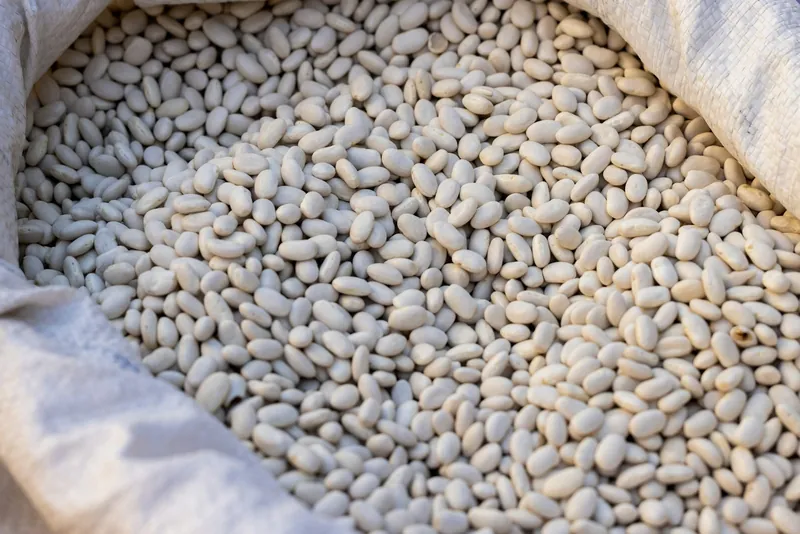
Antalya is a large city on Türkiye's Mediterranean coast. In Yarbaşçandır, a neighbourhood of its Konyaaltı district, grows a bean of its own: the Çandır bean. In Türkiye it is grown only here. Its skin is thin and it cooks quickly. Antalya's well-known bean salad, piyaz, is made with it. Antalya piyaz, known for its tahini dressing, is protected by a geographical indication: an official record that ties a product to a particular place and protects the qualities it has there.
From twenty tonnes to two
Over the years, fewer and fewer people in the neighbourhood sowed the bean. The yearly harvest fell from about 20 tonnes to 2. The bean came close to disappearing.
Turning point
Konyaaltı Municipality began sowing Çandır beans on a field of its own in the neighbourhood, about five dönüm in size (a dönüm is a traditional Turkish land measure of roughly 1,000 square metres). Part of the harvest was handed out to local growers as seed for the next year. To make the bean better known, the municipality also started a Çandır Bean Festival.
Seed from hand to hand
Interest in the bean grew. According to the muhtar, the elected head of the neighbourhood, the municipality's sowing gave people a strong push, and residents started growing the bean again. As demand came back, villagers nearby joined in too. The mayor says that, small as the municipality is, it kept the bean alive by supporting local growers. According to a 2020 report, the harvest went from 2 tonnes to 30 in three years: fifteen times as much. In the year of the pandemic the festival could not be held, so beans from the municipality's field were sent to families in need in aid parcels. The festival continued in later years; the sixth was held in a park in Konyaaltı.
Today
According to an August 2025 report, the municipality has applied to the Turkish Patent and Trademark Office for a geographical indication for the bean, and says the requirements of the application have been met. Alongside the Çandır bean, the same process is under way in Konyaaltı for twelve other local products, such as a molokhia stew, pumpkin gözleme (a thin stuffed flatbread) and Çakırlar bazlama (a village flatbread).
The link to trust
Keeping a seed alive means sharing it as much as storing it. Whoever has a field sows it, whoever has a table cooks it, and the bean belongs to the neighbourhood again.
What do you think?
Is there a product named after the place where you live? Who grows it?
Sources
Go to source · Accessed 22 November 2026
Report on the endangered Çandır bean (in Turkish), NTV
Go to source · Accessed 22 November 2026
Report on Çandır bean growers (in Turkish), Cumhuriyet
Go to source · Accessed 22 November 2026
Report on Antalya's geographical-indication products (in Turkish), Ekonomi Gazetesi
Go to source · Accessed 22 November 2026
Report on the registration of Antalya piyaz (in Turkish), TRT Haber
Go to source · Accessed 22 November 2026
Report on the geographical-indication application for the Çandır bean (in Turkish), Ekonomi Gazetesi, 31 August 2025
Go to source · Accessed 22 November 2026
Related to this story
Do you have a story?
Tell your story →