For those who want to go a little beyond short answers.
Jan Antonin Kolar
Ages 10–13
Deeper questions
For those who want to go a little beyond short answers; each box also leaves a door open to wonder about ‘more’.
Joel & Jasmin Førestbird
How can you tell a tree's age?
Count the rings in the trunk. A new ring forms every year; how thick a ring is gives a clue about that year's rain and temperature. To find out more, look up the word ‘dendrochronology’.
Seth
How does wind energy work?
The wind turns the turbine's blades. The turning blades spin a generator, and the generator makes electricity. Places where the wind blows strongly and steadily are chosen for this.
Shifaaz shamoon
How are the oceans connected to the climate?
Oceans store most of the heat that comes from the Sun and carry it around the world with currents. That is why weather and climate can change with the temperature of the oceans.
Artem Stoliar
What does a product's ‘footprint’ mean?
The total energy, water and materials used to make, transport and use something is called its footprint. The smaller the footprint, the lighter the load on nature.
Jesse Bauer
Why is soil described as something ‘alive’?
A handful of soil holds billions of tiny living things: bacteria, fungi, worms. They break down dead leaves and help plants find food.
Matsvei Liatkouski
What happens when a species declines?
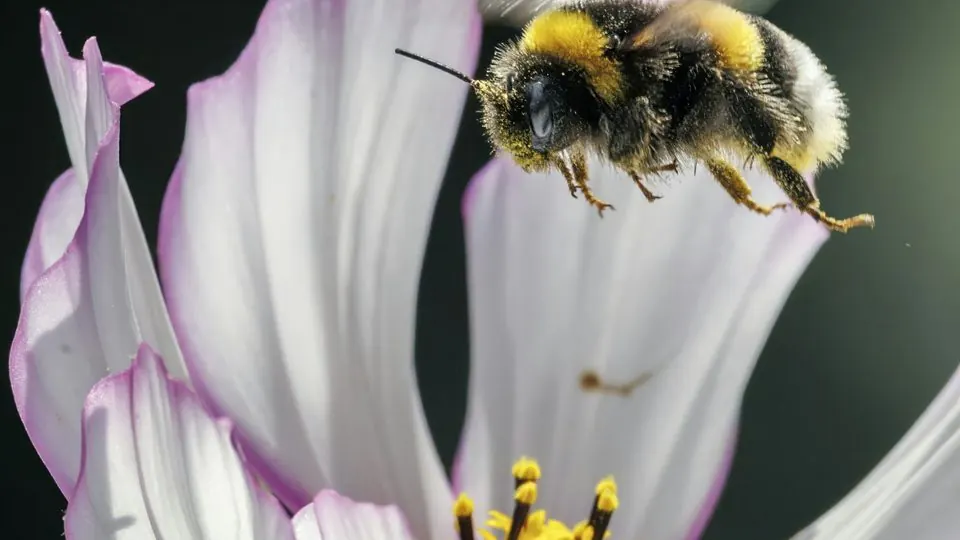
Every living thing in nature is part of a web. If bees decline, flower pollination is affected; if flowers decline, there are fewer fruits and seeds. These links can be drawn as a ‘food web’.
Kaan Kosemen
Small cards with numbers
About 71 per cent of the Earth's surface is water. A tree can take hundreds of litres of water from the soil in a year and let it evaporate from its leaves. Türkiye is a peninsula surrounded by sea on three sides.
Feelings corner
Something about nature may be on your mind; that is very normal. Many people care about the world, and this work is done together.
1You can take a deep breath.
2You can look outside for a while.
3If you like, you can share it with someone.
To calm down
Four cards for pausing, breathing and then thinking of a small step.
Ages 10–13
2 minutes · Who with: on your own
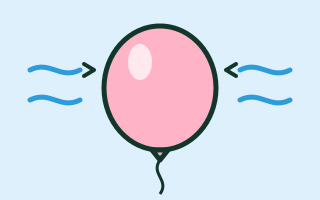
Breath balloon
Put a hand on your tummy. As you breathe in slowly through your nose, feel your tummy fill up like a balloon. As you breathe out slowly through your mouth, the balloon goes down. Repeat five times.
Everyone can play
You can also play this game in other ways.
Quietly: The grown-up shows the belly rising and falling with a hand moving up and down, to set the pace.
Sitting down: It can also be done sitting up straight on a chair.
Source: Oyun Köprüsü website (Tuğba Mutaf): adapted from the “Nefes Balonu” (Breath Balloon) game through a voluntary collaboration.
15 minutes to make · Who with: with a grown-up
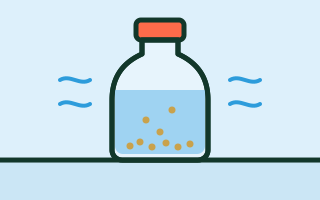
Calm bottle
Materials: a reused clear plastic bottle with a tight lid; water; a handful of sand, some lentils or crumbled dry leaves.
Put water and the filling in the bottle and close the lid tightly; a grown-up checks it. Shake the bottle and watch the filling slowly sink. When your mind feels busy, you can shake the bottle and watch until everything settles. Compare: does sand or lentils sink more slowly?
Why no glitter? The glitter often used in these bottles is mostly made of plastic; in water it turns into tiny plastic pieces that are very hard to collect.
Everyone can play
You can also play this game in other ways.
Eyes closed: Hold the bottle and listen to the rustle after shaking it slowly fade away.
Safety: don't use glass bottles. Don't drink the water inside.
Source: Oyun Köprüsü website (Tuğba Mutaf): adapted from the “Duygu Şişesi” (Feelings Bottle) game through a voluntary collaboration; a natural filling is used instead of glitter. On glitter: Anglia Ruskin University, “Glitter litter could be damaging rivers”.
Ages 10–13
About 20 minutes to prepare · Who with: with a grown-up
Calm corner
Choose a quiet corner at home or in class and set it up together: a cushion, a calm bottle, a leaf or a nature picture.
Go there when needed; nobody asks questions. Come back when ready. The corner is a place to rest, not a place of punishment.
Everyone can play
You can also play this game in other ways.
Quietly: A small picture card is made that means “I’m going to the corner”; no words are needed.
Eyes closed: The corner always stays in the same place and the way to it is kept clear; there is something soft in it that can be recognised by touch.
Sitting down: The corner is set up where it can be reached in a wheelchair or by sitting on the floor.
Source: Oyun Köprüsü website (Tuğba Mutaf): adapted from the “Duygu Güvenli Alanı” (Feelings Safe Space) game through a voluntary collaboration.
10 minutes · Who with: on your own
One topic, one feeling, one step
Pick a nature topic that is on your mind. Think of three things: What feeling does this topic bring up in me? What is within my reach here? What could my small, realistic step be?
Writing is not required; thinking or talking with someone works too. You don't have to solve everything alone; learning more is also a step.
Everyone can play
You can also play this game in other ways.
Quietly: Thoughts can be written, drawn or told in sign.
Link to lessons: Science · Social Studies
Source: Emanet Dünya; Oyun Köprüsü website (Tuğba Mutaf): inspired by the “Journey into the World of Feelings” module.