Sit by a window at home, on a balcony or next to a grown-up, and don't talk for ten minutes. How many sounds did you hear? You can draw them in your notebook.
Everyone can play
You can also play this game in other ways.
Quietly: Instead of sounds, movements are counted: a swaying branch, a passing bird, a drifting cloud.
Eyes closed: Instead of drawing the sounds you heard, you tell a grown-up about them.
Link to lessons: Life Studies
5 minutes · Look once a day · Who with: on your own
Seed in a jar
Put a bean on wet cotton wool and leave it by the window. Look every day and draw the changes.
Everyone can play
You can also play this game in other ways.
Eyes closed: Each day the sprout’s height is marked with a notch on a paper strip; the strips are laid side by side and compared by touch.
Link to lessons: Life Studies · Science
10 minutes · Outdoors · Who with: with a grown-up
Stone collection
Collect five different stones in a box. Which is smooth, which is rough, which is heavy? Then put the stones back.
Everyone can play
You can also play this game in other ways.
Eyes closed: The stones are weighed in the hand and lined up from heavy to light, rough to smooth.
Sitting down: The stones are collected from around where you are sitting; a friend brings the ones further away.
Link to lessons: Life Studies
2 × 5 minutes · Sunny day · Who with: with a grown-up
Shadow hunt
In the morning, draw the shadow of an object; draw it again in the afternoon. Why might the shadow have changed?
Everyone can play
You can also play this game in other ways.
Eyes closed: The shadow is outlined in chalk and a string is laid along the line; the morning and afternoon shadows are compared by touch.
Sitting down: The object is put on a table or a windowsill and its shadow is drawn on paper.
Link to lessons: Life Studies · Science
10 minutes · At home, by a window · Who with: on your own
How does nature make me feel?
You need: a sheet of paper, coloured pencils. Look out of the window for one minute and pick one thing: a tree, a cloud, a bird or the rain.
What feeling does it give you? Calm, curious, happy, a bit sad… Any feeling is fine. Draw the thing and the feeling; let the colours show the feeling.
If you like, show your drawing to a grown-up and tell them about it. Feelings are never right or wrong.
Everyone can play
You can also play this game in other ways.
Eyes closed: The window is opened and the outside is listened to and smelled; the feeling is told, or shaped in play dough, instead of drawn.
Link to lessons: Life Studies · Visual Arts
At home and together
Small things to do at home, in the park and together with a grown-up. Some of them Oyun Köprüsü website through a voluntary collaboration.
Ages 6–9
10 minutes · Outdoors or at home · Who with: with a grown-up
Nature with five senses
Choose a calm spot outdoors. First look for three different colours. Then close your eyes and listen for two different sounds. Touch a surface a grown-up says is safe: tree bark, a flat stone, a dry leaf. Smell with a grown-up, without picking anything.
It works at home too: put some soil, sand and dry leaves in a box. With eyes closed, find which is which by touch. When you finish, take the soil and leaves back outside.
Everyone can play
You can also play this game in other ways.
Quietly: In the listening step, look for a movement instead: a branch swaying in the wind or a flying insect.
Eyes closed: In the colour step, look for three different textures instead; the rest is already played by touching, listening and smelling.
Sitting down: The box version at home is played at a table.
Safety: never taste anything in nature. Don't touch unknown plants, mushrooms or berries; don't catch animals.
Source: Oyun Köprüsü website (Tuğba Mutaf): adapted from the “Duyusal Havuz” (Sensory Pool) game with natural materials through a voluntary collaboration.
Ages 6–9
10–15 minutes · Outdoors · Who with: with a grown-up
The colour of nature
Look around outdoors for a while. Think about which feeling is inside you right now: joy, curiosity, calm, surprise, maybe sadness. Choose a colour that fits this feeling; there is no right colour.
Draw a shape in that colour on paper, or paint a fallen leaf and press it onto the paper. Share the picture with someone if you like. All feelings are normal.
Everyone can play
You can also play this game in other ways.
Quietly: The question is asked by putting the colour pencils out and pointing to them.
Eyes closed: Instead of a colour, a texture is chosen: soft, rough, cool; the feeling is told through that texture.
Sitting down: It can also be played looking out of a window instead of going outside.
Source: Oyun Köprüsü website (Tuğba Mutaf): adapted from the “Duygu Boyama” (Feelings Painting) game through a voluntary collaboration.
Ages 6–9
15 minutes · Outdoors and at home · Who with: with a grown-up
Twig forest
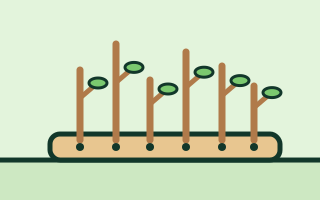
Collect thin dry twigs that have fallen on the ground; don't break branches off trees. Stand the twigs one by one in a cardboard lid with holes or an upside-down colander to make a small forest. Count how many fit.
When you finish, put the twigs back in nature and use the box for another game.
Everyone can play
You can also play this game in other ways.
Quietly: The twigs are counted by pointing to each one.
Eyes closed: The holes are found with a finger and a twig is pushed into each; thick and thin twigs are sorted by touch.
Sitting down: The twigs are gathered from around where you are sitting; the planting is done at a table.
Source: Oyun Köprüsü website (Tuğba Mutaf): adapted from the “Pipet Ormanı” (Straw Forest) game through a voluntary collaboration; dry twigs are used instead of plastic straws.
Ages 6–9
10 minutes · At home · Who with: on your own
Not even one drop
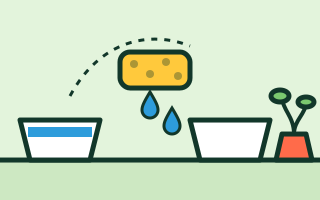
Put some water in one of two containers. Dip a sponge in the water, carry it to the other container and squeeze. Try not to drip.
Notice how much water the sponge holds and how squeezing it differently gets more out. At the end, give the water to a pot plant or a plant in the garden.
Everyone can play
You can also play this game in other ways.
Quietly: The game is explained by showing; the grown-up does it first.
Eyes closed: You can feel the sponge get heavy when it is full and light when it is empty; the containers are found by touch.
Sitting down: The two containers stand side by side on a table.
Source: Oyun Köprüsü website (Tuğba Mutaf): adapted from the “Sünger ile Su Taşıma” (Carrying Water with a Sponge) game through a voluntary collaboration.
15–20 minutes · With a grown-up · Who with: with a grown-up
The park belongs to everyone
Go to a park with a grown-up. Look at who shares the park: people, trees, grass, birds, insects. Think of a need for each: a place to sit, water, a corner to live undisturbed.
Draw or describe an idea that would make the park better for everyone.
Everyone can play
You can also play this game in other ways.
Eyes closed: Who shares the park can also be found by sound and touch: bird song, grass, tree bark; the idea is told instead of drawn.
Sitting down: It is done sitting on a bench; paths in the park that work for wheelchairs and pushchairs can be part of the ideas too.
Safety: don't feed animals or go near nests. Don't pick up litter without gloves and a grown-up.
Link to lessons: Life Studies
Source: Emanet Dünya.
My nature list
Twelve small things. Tick them off; when the page closes the list resets and nothing is saved anywhere.
Activities from our roots
Small missions inspired by things people used to do in these lands. Each card has a link to a page with sources.
Who with: with a grown-up
A small water dish for birds
In the past, small nests and water bowls for birds were built into the walls of mosques and houses. Today, a shallow water dish on the balcony or in the garden carries on the same care.
Everyone can play
You can also play this game in other ways.
Eyes closed: The water is checked with a finger and refreshed; visiting birds are noticed by their sound.
Sitting down: The dish is placed at a height you can reach sitting down, away from the balcony edge.
Worn clothes used to become doormats, and fabric scraps became patchwork quilts. An old T-shirt can also be cut and sewn, or knotted, into a cloth bag.
Everyone can play
You can also play this game in other ways.
Eyes closed: The knotted version of the bag is made by hand without scissors; the grown-up does the cutting.
The saying ‘you reap what you sow’ says that a planted seed pays back in time. Plant a bean or a seedling and measure and draw it every week for a month.
Everyone can play
You can also play this game in other ways.
Eyes closed: Each week the seedling is marked with a notch on a paper strip; the strips are compared by touch.
People say ‘in the old days hardly anything was thrown away’. Ask a grown-up what was kept at home, what was repaired and what was given another use; keep what you learn in your notebook.
Everyone can play
You can also play this game in other ways.
Quietly: The questions are asked in writing or in sign; the answers stay in the notebook.
Eyes closed: The grown-up puts the thing they kept or mended into the child’s hands and tells its story.
İmece is when neighbours do a job together. Helping with a small task in the building or on the street (watering plants, sweeping the stairs) is similar.
Everyone can play
You can also play this game in other ways.
Eyes closed: Choose a job you can do by touch: feel the soil in a pot with a finger and water it if it is dry.
Sitting down: Choose a job you can do sitting down: picking dry leaves off a plant, writing a note for a neighbour.
Make a name and ID card for a tree in the schoolyard or the neighbourhood: its species, roughly how tall it is, how it looks this season. You can research the card with a grown-up.
Everyone can play
You can also play this game in other ways.
Eyes closed: Hugging the trunk shows how thick it is, touching the bark shows its texture; these go on the ID card too.
Sitting down: Choose a tree you can reach sitting down; the high branches are recognised from the fallen leaves.