Source: Oyun Köprüsü website (Tuğba Mutaf): adapted from the “Duyusal Havuz” (Sensory Pool) game through a voluntary collaboration; soil, sand and dry leaves are used instead of baking soda and shaving foam.
At homeOutdoorsWith a grown-up15 minutes
15 minutes · Outdoors and at home
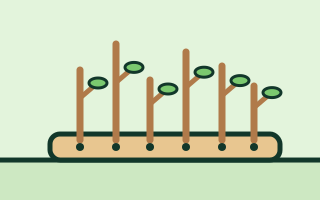
Twig forest
Materials: thin dry twigs that have fallen on the ground, a cardboard box lid with holes or an upside-down colander
Collect fallen twigs on a walk; don't break branches off trees.
Stand the twigs one by one in the holes of the lid to make a small forest. Count them together.
Other ways to playLine the twigs up from short to long. Make a leaf lake or a stone path next to the forest.
Everyone can play
You can also play this game in other ways.
Quietly: The twigs are counted by pointing to each one.
Eyes closed: The holes are found with a finger and a twig is pushed into each; thick and thin twigs are sorted by touch.
Sitting down: The twigs are gathered from around where you are sitting; the planting is done at a table.
What can this game support?It can support fine motor skills and counting.
What does the grown-up do?Lets the child name the forest. When the game ends, takes the twigs back to nature together.
There is also a version of this game for ages 6–9: Twig forest →
Source: Oyun Köprüsü website (Tuğba Mutaf): adapted from the “Pipet Ormanı” (Straw Forest) game through a voluntary collaboration; dry twigs are used instead of plastic straws.
OutdoorsWith a grown-up10 minutes
10 minutes · Outdoors
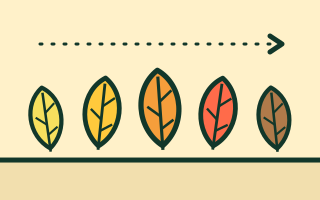
Leaf line-up
Materials: 4–6 fallen leaves of different colours and shapes
Line the leaves up: light to dark, small to big, or in any order you like.
The child moves one leaf; the grown-up tries to find which. Then swap.
Other ways to playName the colours of the leaves: yellow, brown, red, green. Look for a second leaf of the same colour.
Everyone can play
You can also play this game in other ways.
Quietly: “Start” and “done” are given with a hand sign.
Eyes closed: Instead of leaves, things that feel different are lined up: a stone, a pine cone, bark, a leaf; the one that moved is found by touch.
Sitting down: The line is set out on a table or a bench.
What can this game support?It can support ideas of colour, size and order, and looking carefully.
What does the grown-up do?Starts easy. Gives a hint if the child can't find the change, and celebrates together when they do.
There is also a version of this game for ages 10–13: Leaf line-up →
Source: Oyun Köprüsü website (Tuğba Mutaf): adapted from the “Renk Dizileri” (Colour Sequences) game through a voluntary collaboration.



 At home
 With a grown-up
 10–15 minutes
 Outdoors