No timer, no points. Pick one, try it, repeat as often as you like.
Justin Lauria
Games at home
Screen-free games played at home with household things or with a few people. Oyun Köprüsü website through a voluntary collaboration.
Ages 6–9
15 minutes · At home, rainy days · Who with: with a grown-up
Pillow obstacle course
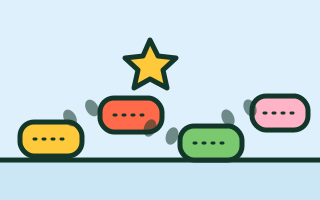
Lay pillows on the floor with gaps between them. Step from pillow to pillow from one end to the other. Then change the course: stand on a pillow and count to five, walk around a pillow.
If there is a younger sibling, they can walk the course too, with the older one showing the way. No timing.
Everyone can play
You can also play this game in other ways.
Quietly: The next cushion is shown with a finger, not with words.
Eyes closed: The cushions are laid close enough to touch; the next one is found by feeling with a foot, and the grown-up always walks alongside.
Sitting down: The course is set up on a table with small cushions or pieces of fabric; fingers or a toy walk from cushion to cushion.
Safety: don't set up the course on a slippery floor or near furniture corners; a grown-up stays nearby.
Source: Oyun Köprüsü website (Tuğba Mutaf): adapted from the “Evdeki Macera: Yastık Parkuru” (Adventure at Home: Pillow Obstacle Course) game through a voluntary collaboration.
Ages 6–9
10 minutes · At home · Who with: with a grown-up
A new job for an empty container
Before throwing it away, look at an empty container: a jar, a cardboard box, a yoghurt pot. What else could it be? Find three ideas; draw them or tell them.
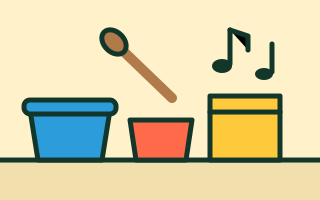
One idea could be an instrument. Tap the containers with a wooden spoon and notice that each one sounds different. One person plays a rhythm, the other repeats; then swap.
Everyone can play
You can also play this game in other ways.
Quietly: A hand rests on the container and feels the vibration when it is tapped; the rhythm is shown in the air with the spoon, and the other person copies what they see.
Eyes closed: The containers are always lined up in the same order; the one to tap is found by touch.
Sitting down: The containers are lined up on a table or on a lap.
Safety: tap glass containers gently; don't use tins with sharp edges.
Source: Oyun Köprüsü website (Tuğba Mutaf): adapted from the “Mutfak Orkestrası” (Kitchen Orchestra) game through a voluntary collaboration.
Ages 6–9
10 minutes · At home or in class · Who with: with a grown-up
Feelings sculptures
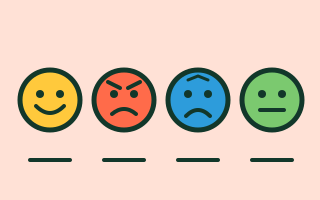
One person names a feeling: joy, curiosity, anger, fear, sadness. Everyone shows that feeling with their body like a sculpture and freezes for a count of five.
Then slowly switch to the “calm” sculpture: shoulders drop, breathing slows. Swap turns.
Everyone can play
You can also play this game in other ways.
Quietly: The feeling is not said aloud; a drawing on a feelings card is shown instead.
Eyes closed: The sculptures also make a sound: a laugh, a sigh, a grumble; the feeling is guessed from the sound.
Sitting down: The sculpture is made sitting on a chair, with just the face, shoulders and arms.