Nature, movement and feelings games for young children, played at home and outdoors, away from screens. Each game has a short note for the grown-up.
Justin Lauria
Moving together
Movement and sound games you can play at home, even on a rainy day.
At homeWith a grown-up10 minutes
10 minutes · At home, rainy days
Pillow obstacle course
Materials: pillows, cushions or a folded blanket
Lay pillows on the floor with gaps between them. First the grown-up walks from pillow to pillow while the child watches. Then it's the child's turn.
Stand on a pillow and count to three, walk around a pillow. No timing.
Other ways to playHop between the pillows like a rabbit, cross slowly like a tortoise. The child builds a new course and this time shows the grown-up the way.
Everyone can play
You can also play this game in other ways.
Quietly: The next cushion is shown with a finger, not with words.
Eyes closed: The cushions are laid close enough to touch; the next one is found by feeling with a foot, and the grown-up always walks alongside.
Sitting down: The course is set up on a table with small cushions or pieces of fabric; fingers or a toy walk from cushion to cushion.
What can this game support?It can support balance, body awareness and following an instruction.
What does the grown-up do?Looks for fun, not speed. Asks “How will you get to the next pillow?” and leaves the answer to the child.
Safety: don't set up the course on a slippery floor or near furniture corners; the grown-up is always close.
Source: Oyun Köprüsü website (Tuğba Mutaf): adapted from the “Evdeki Macera: Yastık Parkuru” (Adventure at Home: Pillow Obstacle Course) game through a voluntary collaboration.
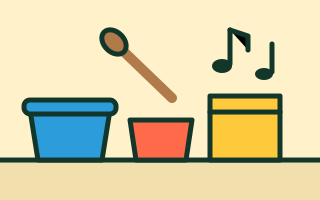
Line the containers up. Tap each one gently with the wooden spoon; listen to which makes a deep sound and which a high one.
The grown-up plays a short rhythm, the child repeats it. Then swap.
Other ways to playPlay slowly like rain, strongly like thunder. When the music stops, everyone freezes like a statue.
Everyone can play
You can also play this game in other ways.
Quietly: A hand rests on the container and feels the vibration when it is tapped; the rhythm is shown in the air with the spoon, and the other person copies what they see.
Eyes closed: The containers are always lined up in the same order; the one to tap is found by touch.
Sitting down: The containers are lined up on a table or on a lap.
What can this game support?It can support listening, rhythm and taking turns. You also notice that a container about to be thrown away has found a new job.
What does the grown-up do?Repeats the child's rhythm exactly and hands over the conductor's role.
Safety: don't hit glass containers; don't use tins with sharp edges.
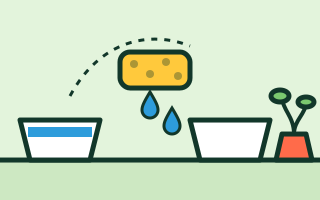
Source: Oyun Köprüsü website (Tuğba Mutaf): adapted from the “Sünger ile Su Taşıma” (Carrying Water with a Sponge) game through a voluntary collaboration.



 At home
 With a grown-up
 10 minutes