Small games for recognising feelings and calming down. All feelings are normal.
 At home
 With a grown-up
 10 minutes
 · At home
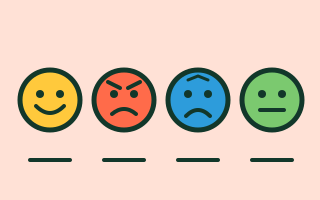
Feelings sculptures
Materials: none needed
The grown-up names a feeling: joy, anger, sadness. Everyone shows that feeling with their body and freezes for a count of three.
Then slowly switch to a “calm sculpture”: shoulders drop, breathing slows.
Other ways to playThe child shows a feeling and the grown-up guesses. You can play in front of a mirror.
Everyone can play
You can also play this game in other ways.
- Quietly: The feeling is not said aloud; a drawing on a feelings card is shown instead.
- Eyes closed: The sculptures also make a sound: a laugh, a sigh, a grumble; the feeling is guessed from the sound.
- Sitting down: The sculpture is made sitting on a chair, with just the face, shoulders and arms.
What can this game support?It can help with recognising and naming feelings.
What does the grown-up do?Welcomes every feeling as normal; an “angry sculpture” and a “sad sculpture” are both good sculptures.
There is also a version of this game for ages 6–9: Feelings sculptures →
Source: Oyun Köprüsü website (Tuğba Mutaf): adapted from the “Duygu Heykelleri” (Feelings Sculptures) game through a voluntary collaboration.

At home OutdoorsWith a grown-up2–3 minutes
2–3 minutes · Anywhere
Breath balloon
Materials: none needed; a small soft toy if wanted
Put a hand on the tummy. Breathing in slowly through the nose, the tummy fills like a balloon; breathing out through the mouth, it goes down.
Repeat three times. The grown-up does it first.
Other ways to playLie on your back and put a soft toy on your tummy. Watch together as the toy goes up and down.
Everyone can play
You can also play this game in other ways.
- Quietly: The grown-up shows the belly rising and falling with a hand moving up and down, to set the pace.
- Sitting down: It can also be done sitting up straight on a chair.
What can this game support?It can support calming down and noticing the body.
What does the grown-up do?Offers breathing as a game; doesn't insist if the child doesn't want to.
There is also a version of this game for ages 10–13: Breath balloon →
Source: Oyun Köprüsü website (Tuğba Mutaf): adapted from the “Nefes Balonu” (Breath Balloon) game through a voluntary collaboration.
At homeOutdoorsWith a grown-up10–15 minutes
10–15 minutes · At home or outdoors
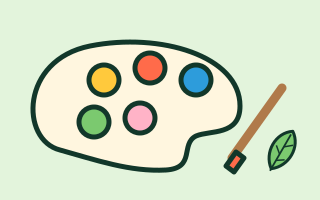
Which colour are you today?
Materials: paper, paints or finger paints; a fallen leaf if wanted
The grown-up asks: “Which colour do you feel like today?” There is no right colour.
The child draws a shape in that colour or presses a painted leaf onto the paper.
Other ways to playThe grown-up also picks a colour and briefly says why. Put the pictures side by side.
Everyone can play
You can also play this game in other ways.
- Quietly: The question is asked by putting the colour pencils out and pointing to them.
- Eyes closed: Instead of a colour, a texture is chosen: soft, rough, cool; the feeling is told through that texture.
- Sitting down: It is played sitting by a window; the leaf is brought in from outside.
What can this game support?When words are hard, it can help a child express a feeling through colour.
What does the grown-up do?Doesn't interpret the colour; asks with curiosity: “What did this colour remind you of?”
There is also a version of this game for ages 6–9: The colour of nature →
Source: Oyun Köprüsü website (Tuğba Mutaf): adapted from the “Duygu Boyama” (Feelings Painting) game through a voluntary collaboration.

With a grown-upAbout 20 minutes to prepare
About 20 minutes to prepare
Calm corner
Materials: a cushion, something soft, a nature picture or a pine cone
Set up a quiet corner at home together. The child chooses what to put in it.
Go there when needed; come back when ready.
Other ways to playPut a piece of nature the child likes in the corner and change it with the seasons.
Everyone can play
You can also play this game in other ways.
- Quietly: A small picture card is made that means “I’m going to the corner”; no words are needed.
- Eyes closed: The corner always stays in the same place and the way to it is kept clear; there is something soft in it that can be recognised by touch.
- Sitting down: The corner is set up where it can be reached in a wheelchair or by sitting on the floor.
What can this game support?It can support coping with feelings and self-calming.
What does the grown-up do?Never uses the corner as a punishment. Sits quietly next to the child if needed.
There is also a version of this game for ages 10–13: Calm corner →
Source: Oyun Köprüsü website (Tuğba Mutaf): adapted from the “Duygu Güvenli Alanı” (Feelings Safe Space) game through a voluntary collaboration.